
The Child Outcomes Summary Form is a mechanism to document rating decisions and provide evidence that supports the rating from multiple sources.
Category Archives: Resource Type
What DaSy Can Do For You: 2026 Webinar

Learn how DaSy can support state efforts to collect and use data to meet IDEA reporting requirements and improve programs and outcomes for young children with disabilities and their families.
Data Leadership Competencies Self-Assessment
This self-assessment allows individuals and data teams to examine their status on each of the Data Leadership Competencies and develop a plan for building competencies based on the results of the assessment.
DaSy Data System Framework

Supporting Part C and Part B 619 programs developing state data systems.
2021 State of the States Brief: Data Availability for Part B 619 Programs
State Part B data systems that contain high-quality early childhood special education (ECSE, IDEA Section B 619) content and functionality allow state staff to answer critical questions about their programs and the children and families they serve. The 2021 State of the States Survey data show that most ECSE programs had state data systems that […]
Improving Hawaii’s Child Find System through Technical Assistance from DaSy, ECTA, and the Waters Center for Systems Thinking
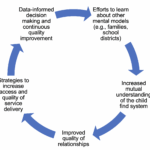
In 2023-2024, DaSy partnered with the ECTA and the Waters Center for Systems Thinking to facilitate a multi-state cohort on integrating data processes and systems thinking to make meaningful, sustainable change for children with disabilities and their families. This cohort strengthened the capacity of state staff to effectively use data in conjunction with the Habits of a Systems Thinker to guide decision making related to improving access, services, and results for young children with disabilities and their families.
Part C Data Tips: News and Resources for the FFY 2024 SPP/APR

Stay up to date on this year’s templates, changes, and supports. Check out this summary of new guidance, office hours, and important reminders.
Part C Exiting Data Submission Office Hours

DaSy is offering additional support with the Part C Exiting Survey data submission in EDPass (FS901 data & FS5026 metadata) prior to its due date of February 18, 2026. We are hosting “come and go” office hours. Please join one or more if you would like DaSy’s help with your file submission. We will have expert TA staff […]
Crosswalk Comparisons of FFY 2024 to FFY 2023 Part B & Part C SPP/APR Templates
These Crosswalks detail the changes in the Part B & C SPP/APR FFY 2024 Templates compared to the Part B & C SPP/APR FFY 2023 Templates.
Episode 2: Beyond the Tip of the Iceberg: Transforming Child Find Through Systems Thinking
In this episode of DaSy Talks, Jenna and Howard sit down with Tracy Benson of the Waters Center and Luke Kusumoto from Hawaii’s Department of Health to explore how systems thinking can transform data use in early childhood programs.