

ECDataWorks (ECDW) supports state early care and education systems to advance policy and programs through the strategic use of integrated data. To continue to support state teams, ECDW is hosting a national meeting, Building Resilient Data Analytics Virtual Convening, on February 22-26, 2021. The convening will highlight national examples, hear from leading experts in data […]
Tag Archives: Data Reporting and Analytics
Family Outcomes Data Community of Practice

December 10, 2026 at 1 pm PT / 4 pm ET. This COP allows individuals to share issues and resources related to family outcomes measurement.
FFY 2017 Child and Family Outcomes Data Highlights
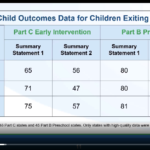
November 22, 2019 Webinar Recording Webinar Slides The ECTA and DaSy Center staff have completed their national child and family outcomes data analysis. They discuss the national performance data for indicators C3, C4, and B7, including national data, state variations in performance, family survey approaches used, and TA resources. The first half of the call […]
Using IDEA Part C and 619 Data in the PDG 0-5 State Systems Needs Assessment Webinar
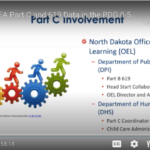
August 27, 2019 States awarded Preschool Development Grants B-5 (PDG B-5) are actively engaged in assessing the current needs for children and their families identified as vulnerable. States are taking a comprehensive approach to exploring needs and are tasked with bringing together key partners to strengthen the diversity of input and contributions to the process. […]
Linking EHDI and Part C Data Webinar
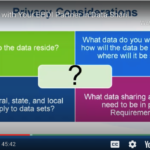
August 28, 2019 This interactive webinar highlights stories from Part C Coordinators who have or are developing collaborative data sharing agreements that allow them to share Part C data with their Early Hearing Detection and Intervention Program (EHDI). This webinar also allows participants to express their challenges and/or issues and as a group and brainstorm […]
Telling Your Data Story with an Infographic Workshop Series

April 4, 2019 This series of virtual workshops will equip participants with resources and tools as well as feedback and support to develop an effective infographic. In the first workshop, facilitators will review best practices, share resources, provide a how-to on using tools, and share exemplar infographics. In the second workshop, participants will share infographics […]
Data Culture: What Does It Look Like in Your Program? Encore Webinar

February 6, 2019 Learn about state efforts to build a culture of data use and use this information to reflect on your state or program’s data culture. Resources including the DaSy Data Culture Toolkit will be discussed. Presented by Brenda Sharp, Lisa Backer, Haidee Bernstein, and Tony Ruggiero in February 2019 Webinar Recording Webinar Presentation
Collecting, Analyzing, and Sharing Qualitative Data Encore Webinar
This webinar includes best practices in collecting, analyzing and sharing qualitative data with an example from Louisiana’s SSIP work. This webinar also shares resources to support qualitative methods and an activity for participants to practice analyzing qualitative data. Presented by Megan Cox, Kerry Friedman, Brenda Sharp and Debbie Shaver in January 2019 Webinar Recording Webinar […]
Excel calculator for computing the Number and Percentage of Infants and Toddlers who did not Receive Early Intervention Services for at Least Six Months

This Excel tool can be used to compute the difference between valid entry and exit dates for children receiving early intervention services and count the number of children with less than or more than 6 months of service. The tool will generate a count of the number of infants and toddlers who were in the […]
Guidance for computing the Number and Percentage of Infants and Toddlers who did not Receive Early Intervention Services for at Least Six Months

This Word document provides guidance for states that can support the calculation of the Number and Percentage of Infants and Toddlers who Received Early Intervention Services for at Least Six Months. The guidance provides information about data requirements, assumptions, and data quality checks. The tool takes into account the expected variability in how states define […]