Category Archives: DaSy Center

Data Linkages Between Health, Education, and Social Service Programs: Making the Connection for Young Children with Special Needs

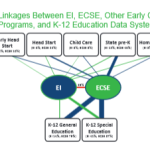
Chart of linkages between EC and K-12 data systems

Conference: CityMatCH Leadership and MCH Epidemiology Conference Date: September 2014 Presenters: Taletha Derrington, Donna Spiker, Kathleen Hebbeler, & Martha Diefendorf This 2014 poster shares the results of the DaSy State of the States Needs Assessment related to cross-system linkages between early intervention, early childhood special education, health, early childhood, educational, and social service program child […]

Data De-identification: An Overview of Basic Terms

This 2014 document is intended to assist early intervention service programs and providers and preschool special education programs and agencies in maintaining compliance with privacy and confidentiality requirements under IDEA and FERPA. It reviews the terminology used to describe data de-identification as well as related concepts and approaches; provides general best practice de-identification strategies for […]

SSIP Phase I Roadmap

Gameboard image with children

This 2014 document provides a description of the activities involved in the development of the SSIP (SPP/APR Indicators C11 and B17) due to OSEP on April 1, 2015. The roadmap is intended to support states with completing Phase I of the SSIP process. Questions to consider are provided to help states with planning and implementing […]

ECIDS and DaSy: Frameworks for Building Better Data Systems

Title slide: ECIDS & DaSy Frameworks

Conference: NCES STATS-DC Data Conference Date: July 2014 Presenters: Colleen Murphy, Jaci Holmes, Kathleen Hebbeler, & Missy Cochenour This presentation shares an overview of the ECIDS Toolkit and DaSy framework and discusses how these frameworks can help you use your data through current state examples. Also discussed are implications for integrating early childhood program data […]

Benefits and Challenges of Integrating Data in Early Childhood: The Case of Early Intervention and Early Childhood Special Education

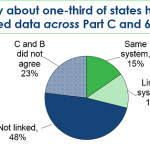
Pie chart system agreement

Conference: NCES STATS-DC Data Conference Date: July 2014 Presenters: Linda Goodman, Kathleen Hebbeler, Abby Winer, & Meredith Miceli This presentation discusses how young children with disabilities, who often are served in multiple programs, are likely to benefit from more coordinated state efforts to integrate data systems across programs. The issues states face when trying to […]

High Quality Child Outcomes Data in Early Childhood: More Important than Ever

Children working, question text

Conference: Office of Special Education Programs (OSEP) Project Directors Meeting Date: July 2014 Presenters: Kathleen Hebbeler, Christina Kasprzak, & Lynne Kahn This presentation discusses how using child outcomes data became more important for states this year because of a new requirement for a State Systemic Improvement Plan (SSIP) based on data analysis. The presentation focuses […]

Collaboration through Information Sharing: Building Early Childhood Integrated Data Systems

Puzzle pieces spell Win Win

Conference: Head Start’s 12th National Research Conference on Early Childhood Date: July 2014 Presenters: Jennifer Tschantz, Missy Cochenour, Donna Spiker, Lynne Kahn, Kathleen Hebbeler, Lauren Barton, & Suzanne Raber These presentations are part of a symposium that describes the national landscape of federal investments and resources to develop integrated and longitudinal state level data systems. […]

The ABCs of Data Dictionaries

This 2014 brief provides an overview of the basic components of a data dictionary and is designed to educate and inform IDEA Part C and Part B 619 state staff about the purpose and benefits of having up-to-date data dictionaries for their data systems. By Tate Gould, Amy Nicholas, William Blandford, Tony Ruggiero, Mary Peters, […]

Data Visualization: A Picture’s Worth a Thousand Numbers

Blue Eye

This 2014 webinar is an encore presentation from the 2013 Improving Data, Improving Outcomes conference and explores the “why’s, what’s and how’s” of visualizing data. Different approaches that some states have used to display data in innovative and visually interesting ways as a means to better understand and communicate data are presented. The accompanying resource […]