
Creating a culture of data use requires attention to People, Process, and Product. A short blog post from the Whole Whale company outlines the key points about each of those components and includes guiding questions for data teams: How to Build a “Data Culture”?
Author Archives: Elaine Mulligan
How to Build a “Data Culture”?

This short blog post from Whole Whale identifies three key components for building a Data Culture and outlined the role that each play in the process. It’s a helpful introduction to data culture for organizations that are just beginning this work. (Note: Whole Whale is a commercial digital agency. Sharing of this post does not […]
How States Use Data to Inform Decisions
This 2018 Pew Trust study used data collected from interviews with more than 350 state officials to highlight ways in which some government leaders have employed sophisticated data analytics, beyond traditional uses of administrative data, to: craft policy responses to complex problems; improve service delivery; manage existing resources; and examine policy and program effectiveness. View […]
Key Activities to Build a Culture of Data Use
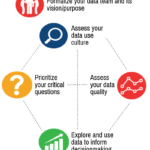
This DaSy-developed infographic identifies five key activities necessary for building a culture of data use. It is the foundation of our Data Culture Toolkit. View Culture of Data Use Infographic or text-only version
Introducing the Data Culture Toolkit
Looking to create a culture of data use in your state or organization? Our latest toolkit offers a five-step process with infographics, worksheets, and a self-assessment tool to help you formalize your data team and its vision/purpose; assess your data use culture; prioritize your data team’s critical questions; assess and improve your data quality; and […]
Good stuff at #ECIDEA18: COS process training resources

The Child Outcomes Summary (COS) process is a team process for summarizing information on a child’s functioning in each of the three child outcome areas using a 7-point scale. With the COS process, a team of individuals who are familiar with a child (including parents) consider multiple sources of information about his/her functioning, including observation […]
A Framework for Choosing a State-Level Early Childhood Governance System

A number of states have made ambitious governance changes that involve creating new agencies focused on early childhood programs and services for children from birth to age four, or consolidating multiple early childhood programs into the same agency. These governance structures can offer multiple benefits, but states that have been through the process have emphasized […]
Complete your Data Story with Qualitative Data

The most important goal of collecting, analyzing, and sharing data is to inspire action and the most effective way of inspiring action is to engage in data story-telling. When you tell a story using data, you need to understand not only what the numbers are saying, but why the numbers say that and how they […]
Innovative funding for early childhood programs? Yes, please!

A new funding approach is being explored to support services for young children with disabilities and their families. PFS is an innovative financing model that tests and advances promising and proven interventions. Across a number of sectors, programs and private funders are teaming up to address critical needs through Pay for Success (PFS). This innovative […]
Telling your data story with an infographic: It’s easier than you think!
Do you have a great data story to tell? Do you need to communicate your data story concisely and clearly to a diverse audience? If so, an infographic is your answer and our upcoming conference session, can help. Whether you’re brand new to infographics or just looking to enhance your skills, Telling your Data Story […]