Category Archives: 2016

Finance Management 101 for Early Childhood Programs

Smiling infant in front of flowered wallpaper

Conference: Division for Early Childhood’s (DEC) 32nd Annual International Conference on Young Children with Special Needs and Their Families Date: October 2016 Presenter: Maureen Greer, Jamie Kilpatrick, Katy McCullough, Kellen Reid, & Donna Spiker This poster displays the powerful uses of fiscal data to inform program budget development and management, implementation, and sustainability. Poster: Finance […]

The Center for IDEA Early Childhood Data Systems (DaSy Center)

Red DaSy

Conference: Division for Early Childhood’s (DEC) 32nd Annual International Conference on Young Children with Special Needs and Their Families Date: October 2016 Presenter: Kathleen Hebbeler & Donna Spiker This poster shares information about the DaSy Center, an OSEP-funded national TA center, and gives examples of some of the resources that the center has developed to […]

Linking Data to Increase Maltreated Children’s Access to Early Intervention in Alaska

Conference: The Maternal and Child Health Epidemiology (MCHE) Conference Date: September 2016 Presenter: Taletha Derrington, Lisa Balivet, Kenneth Smith, & Haidee Bernstein This presentation goes over the trends in referral, eligibility, evaluation, eligibility status, enrollment, and retention in EI services among Child-Welfare referred children in comparison to children referred by all other sources in pre- […]

Using Data Systems to Improve Maltreated Children’s Access to Early Intervention in Colorado

Conference: The Maternal and Child Health Epidemiology (MCHE) Conference Date: September 2016 Presenter: Taletha Derrington, Lenita Hartman, Christy Scott, Lorendia Schmidt, & Haidee Bernstein This poster describes the effect of the two data system enhancements on EI referrals and evaluation for eligibility among infants and toddlers with substantiated maltreatment in Colorado. Poster: Using Data Systems […]

SSIP Phase III Process Guide

This 2016 guide includes key considerations and resources to support states in implementing the SSIP and evaluating implementation progress and outcomes. Particularly useful are the Key Terms section, the lists of resources in each section, and the section compiling all of the guide’s Tools and Resources for Phase III. Published by: ECTA Center, DaSy Center, […]

Building System Capacity to Implement Evidence Based Practices

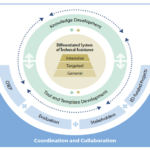
Conference: OSEP Project Directors Date: August 2016 Presenters: Christina Kasprzak, Kathy Hebbeler, Donna Spiker, & Megan Vinh This presentation describes a systems framework and self-assessment used to assist EI/ECSE programs in assessing current systems, planning for improvement, and measuring changeover time. State examples illustrate use and increased system capacity. Presentation: Building System Capacity to Implement […]

How High Quality IDEA Data Supports Systemic Change in States

Conference: OSEP Project Directors Date: August 2016 Presenters: Dave Phillips, Bill Huennekens, Donna Spiker, & Tom Fiore This 2016 presentation provides examples from four TA centers of how high-quality IDEA data can contribute to systemic changes that strengthen data infrastructures in states, which enable the improvement of services and supports for students with disabilities. Presentation: […]

How Data Empowers Parents

Logo: Data Quality Campaign

This 2016 resource from the Data Quality Campaign offers both an infographic and a short video with examples of ways that access to data that can help parents participate effectively in their child’s education. Examples of data sharing both from the school to the family and from the family to the school are included. Data […]

Using Integrated Data to Support the Transitions in Special Education

Conference: STATS-DC Date: July 2016 Presenters: Meredith Miceli, Missy Coffey, Sherry Franklin, Colleen Murphy, Kriste Elia, & Donna Johnson This 2016 presentation highlights current state approaches and describes how technical assistance is helping states link Part C and Part B data. Linked data can support providers in creating effective transitions and help state agencies see […]